Hair Thinning Treatment in Nandyala
Thinning hair affects millions of men and women and can significantly impact confidence and wellbeing. Dr. Sireesha at Yashvini Skin & Hair Clinic, Nandyala, offers comprehensive evaluation and evidence-based treatments to slow hair thinning, restore density, and support long-term follicle health.
Understanding Hair Thinning
Hair thinning refers to a gradual reduction in hair density, strand diameter, or overall volume — and it can be diffuse (uniform across the scalp) or patterned (concentrated in specific zones). Unlike acute hair fall that involves sudden, noticeable shedding, hair thinning is a slower process where the hair shaft itself becomes progressively finer and shorter over time due to a phenomenon called follicular miniaturisation. In miniaturisation, hair follicles shrink over successive growth cycles, producing increasingly thinner, shorter, and more fragile hairs until they eventually cease producing hair altogether.
The most common underlying cause is androgenetic alopecia — or genetic pattern hair loss — driven by the hormone dihydrotestosterone (DHT). In men, DHT-sensitive follicles at the temples and crown miniaturise progressively, following the Norwood-Hamilton classification (Stages I–VII). In women, the pattern is different: hair thins diffusely over the crown, with widening of the central part, classified on the Ludwig scale (Grades I–III). The frontal hairline is usually preserved in women. Female pattern hair loss is often compounded by hormonal factors (PCOS, post-pregnancy hormonal shifts, menopause) and nutritional deficiencies common in South Indian populations, particularly iron and Vitamin D.
An accurate diagnosis — including trichoscopy (dermoscopy of the scalp), pull test, and targeted blood investigations — is essential before initiating treatment. Many patients with hair thinning have a reversible nutritional or hormonal component that, when corrected, significantly improves hair density. For those with true androgenetic alopecia, treatment focuses on slowing the miniaturisation process and stimulating the remaining active follicles, using a combination of topical, oral, procedural, and device-based therapies.
Causes
Symptoms & Types
Male Pattern Hair Loss (Androgenetic — Norwood Scale)
Progressive recession at the temples (M-shaped hairline) followed by thinning at the crown vertex. The Norwood-Hamilton scale (Stages I–VII) classifies severity. DHT-sensitive follicles in these zones miniaturise over years. Frontal and temporal hair often remains thicker as it has lower DHT sensitivity.
Female Pattern Hair Loss (Ludwig Scale)
Diffuse thinning of the crown with widening of the central hair part, typically graded I–III on the Ludwig scale. The frontal hairline is characteristically preserved. Women may notice more hair on pillows and in the drain rather than obvious bald spots. Often aggravated by hormonal changes and nutritional deficiencies.
Diffuse Hair Thinning
Uniform thinning across the entire scalp, without a specific pattern. Commonly associated with nutritional deficiencies, thyroid dysfunction, or telogen effluvium. A pull test (gently pulling 40–60 hairs) and trichoscopy help characterise the degree and distribution of miniaturisation.
Trichorrhexis Nodosa (Structural Hair Weakness)
Physical and chemical damage (excessive heat, harsh chemical treatments, bleaching) can cause the hair shaft itself to weaken and break, creating the appearance of thinning. Treatment focuses on reducing damage and nutritional support rather than follicle stimulation.
Miniaturisation on Trichoscopy
Under dermoscopy, follicle miniaturisation is visible as a mix of thin, short vellus-like hairs alongside normal terminal hairs — an early diagnostic sign of androgenetic alopecia. This finding confirms the need for DHT-blocking and growth-stimulating treatments.
Treatment Options at Yashvini Clinic
Topical Minoxidil
The most widely used first-line treatment for hair thinning. Minoxidil 2% solution is standard for women; 5% solution or foam for men. Applied once or twice daily to a dry scalp. Promotes blood flow to follicles and prolongs the anagen (growth) phase. Requires consistent long-term use — stopping leads to reversal of benefit.
Oral Minoxidil (Low Dose)
Growing evidence supports low-dose oral minoxidil (0.625–2.5 mg daily for women; 2.5–5 mg for men) as an effective alternative or addition to topical minoxidil, particularly for patients who find topical application inconvenient. Prescribed after assessment of cardiovascular health.
Finasteride / Dutasteride (Men)
Oral 5-alpha reductase inhibitors that reduce scalp DHT by 60–90%. Finasteride 1 mg daily is FDA-approved for male androgenetic alopecia. Dutasteride (0.5 mg daily) is more potent. Not prescribed to women of childbearing age. Requires 3–6 months of use before visible benefit.
PRP (Platelet-Rich Plasma) Therapy
Growth factors in concentrated PRP stimulate miniaturised follicles and improve blood supply to the scalp. Particularly useful in early to moderate thinning where follicles are dormant but viable. Initial course of 3–4 sessions, followed by maintenance every 3–6 months.
LLLT (Low-Level Laser Therapy)
FDA-cleared devices (laser caps, laser combs) deliver red or near-infrared light to the scalp, stimulating cellular energy production in follicle cells and improving hair density. Suitable for mild to moderate thinning as an adjunct to minoxidil or PRP. Used at home 3 times per week.
Nutritional Support & Supplementation
Iron, Vitamin D, zinc, biotin, and protein are critical for hair follicle function. Blood tests identify specific deficiencies, and targeted supplementation is prescribed accordingly. Nutritional correction alone can meaningfully improve hair density in deficiency-related thinning.
What to Expect
Diagnosis & Baseline
- Trichoscopy (scalp dermoscopy) to assess miniaturisation pattern and severity
- Pull test to quantify active shedding across different scalp zones
- Blood panel: ferritin, TSH, T3/T4, Vitamin D, B12, zinc, CBC, hormones (in women)
- Hair density assessment and baseline photographs for progress tracking
- Review of current medications and hair care products for potential contributors
Active Treatment
- Begin topical or oral minoxidil as directed — allow 3–6 months for initial response
- PRP sessions (if recommended) scheduled 4 weeks apart for initial course of 3–4
- Correct any nutritional deficiencies with prescribed supplements
- LLLT sessions 3x per week if device prescribed or available at home
- Review at 3 months; trichoscopy repeated at 6 months to objectively assess response
Maintenance & Long-Term Care
- Minoxidil must be continued indefinitely — it is a lifelong maintenance medication for androgenetic thinning
- PRP maintenance sessions every 3–6 months to sustain follicle stimulation
- Repeat blood tests annually to ensure nutritional levels remain optimal
- Adjust treatment if response plateaus — combination therapy often needed for advanced thinning
- Hair transplant evaluation if medical therapy is insufficient for the degree of loss
Benefits
Aftercare & Home Care
Frequently Asked Questions
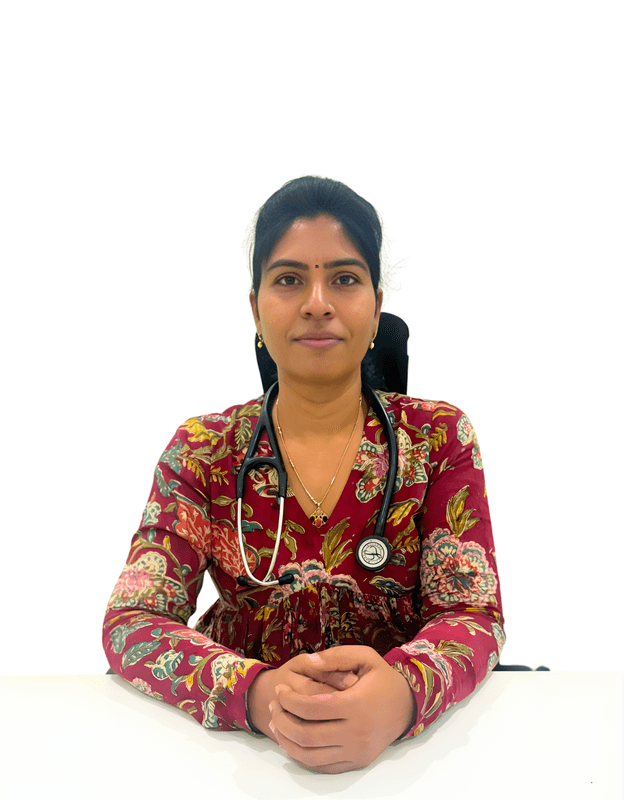
Don't Wait — Address Hair Thinning Early. Consult Dr. Sireesha in Nandyala
Book a consultation with Dr. Sireesha at Yashvini Skin & Hair Clinic, Nandyala.